Mental performance. Mental care.
Train your mind.
Bring it to the game.
Build skills for the pressure of sport, with a clear path to mental health support when you need it.
The whole athlete. One experience.
Mental performance.
Mental care.
From the skills you build every day to the support you need along the way.
- 01
Train
Build mental skills for focus, pressure, and the next play.
Daily skill training - 02
Detect
Use check-ins to notice changes and recognize when support may help.
Check-ins & early awareness - 03
Protect
Keep personal information within clear sharing and care boundaries.
Privacy & consent - 04
Connect
Find the right human support and a clear next step.
Human support & follow-up
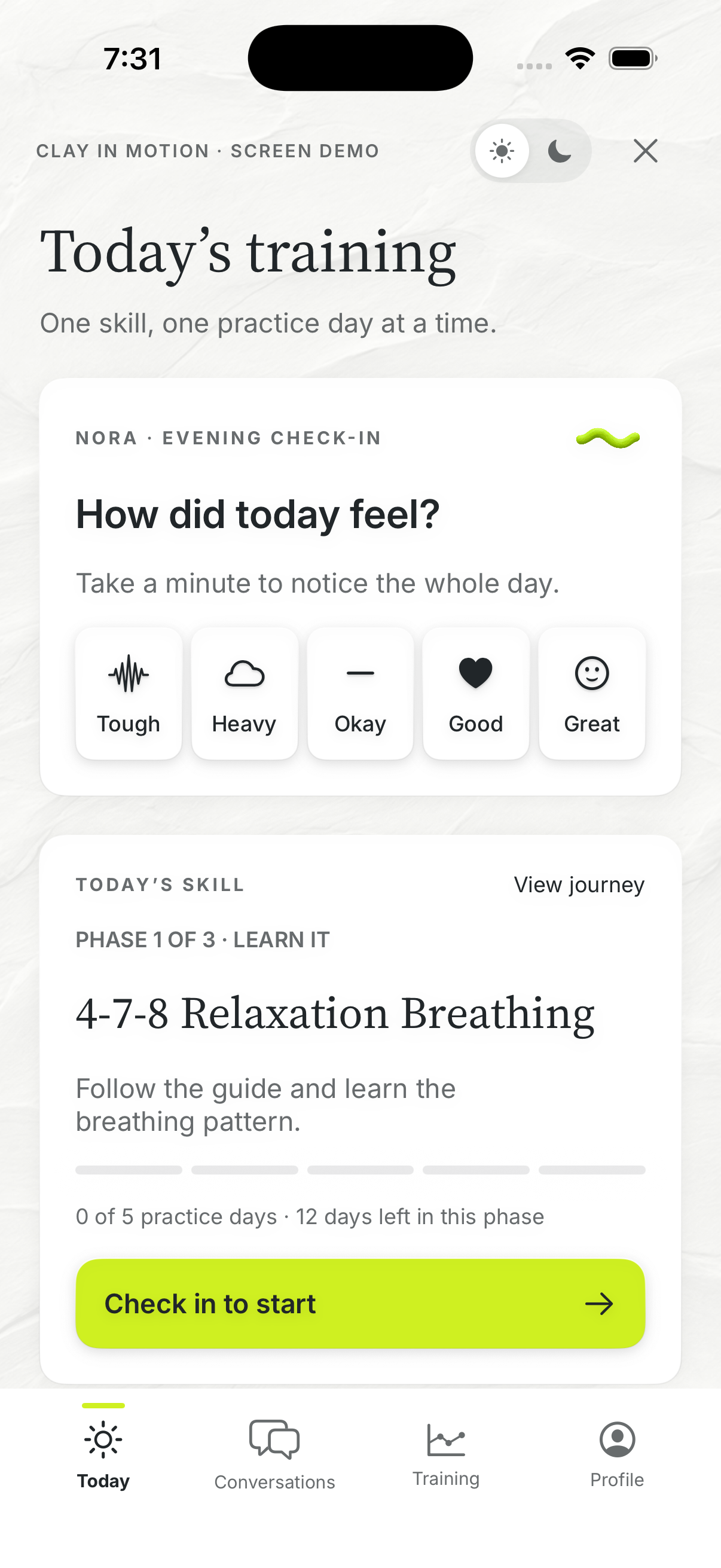

A daily practice.
A clear next step.
Check in
Notice how you feel before you begin.
Practice a skill
Make time for a short mental training session.
Take it into sport
Choose a cue for your next practice or game.
Try it
About a minute.
Right here.
This is the loop athletes run every day. Check in, practice a skill, take a cue into sport.
- Check in
- Practice a skill
- Take it into sport
Nora · Evening check-in
How did today feel?
Take a minute to notice the whole day.
How recovered does your body feel?
02 · Practice a skill
4-7-8 Relaxation Breathing
NORA
03 · Take it into sport
Pick a cue to take into sport.
Say it before you start. In the app, Nora checks back in after.

For the athlete.
And the person.
Support for the pressure of sport and the life around it. Mental performance and mental care, together.
Mental health support
A real person.
A clear next step.
Some days call for a conversation. AthleticMind brings a path to licensed care into the same experience as daily mental training.
See how care teams support athletesFrom reaching out to following through
Ask for support
Start with what’s on your mind. A support request gives the care team a place to begin.
Understand what’s shared
For routine support, review the information and recipient before agreeing to share.
Connect with care
Care teams can review the concern, coordinate licensed care, and plan follow-up.
Clinical information has a separate place in the authorized care team’s workspace.
For coaches + athletic trainers
Make skill training
a team habit.
Build the routine. Follow participation. Keep mental performance part of the week.
See who’s showing up
Follow check-in adherence, skill training, and wearable coverage.
Know what the team is learning
See the most common current skill and progress through each phase.
Give trainers the right context
Review shared team mood, reported recovery, wearable summaries, and journaling activity.
Coaches and trainers follow participation and permitted summaries. Private journal entries and Nora conversations are kept out of their dashboards.
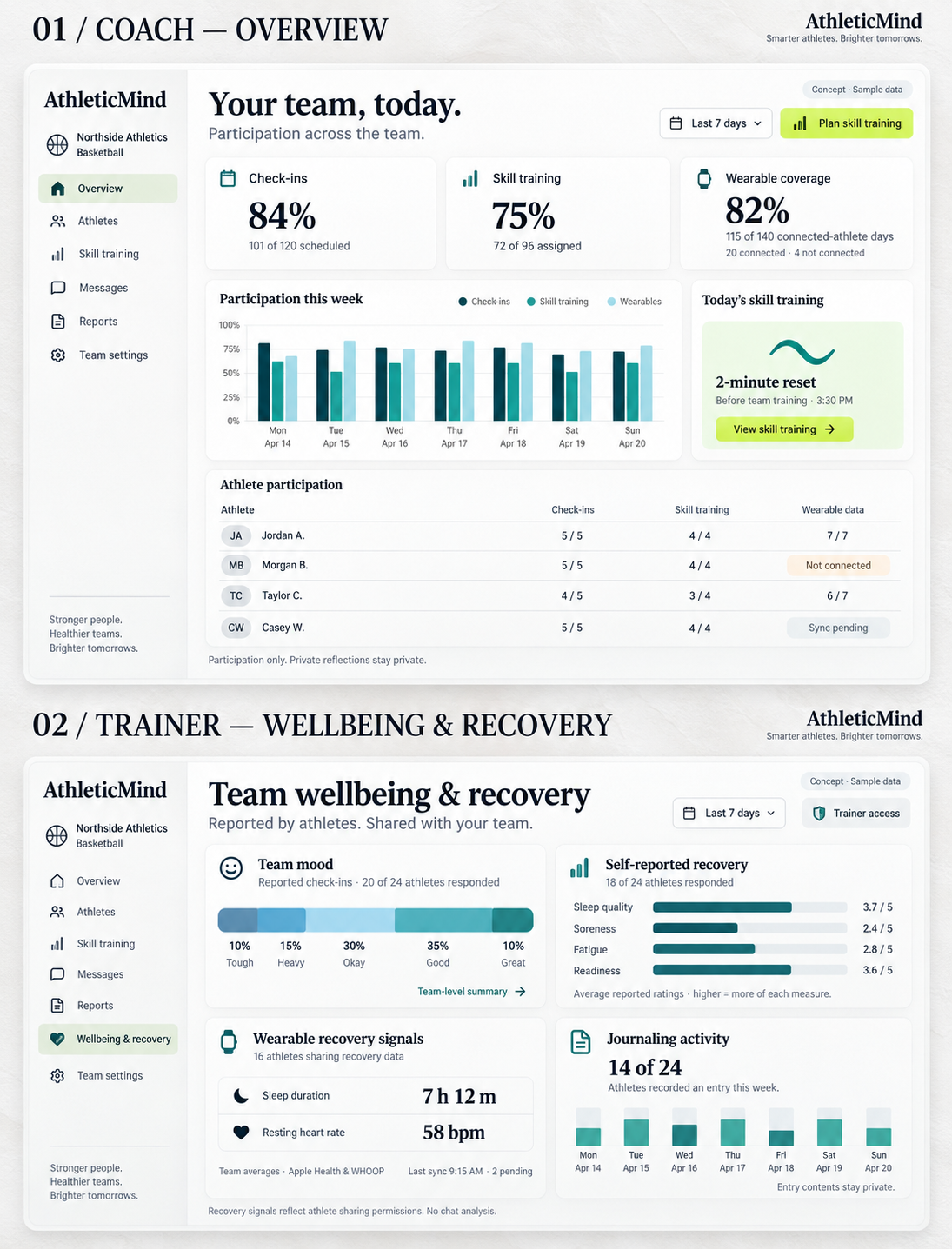
Breathing14 of 24 athletes · Most common skillView skill training →
COACH WORKSPACE
Your team, today.
Participation across the team.
Participation this week
What your team is learning
∿4-7-8 Relaxation Breathing
14 of 24 athletes · Most common skill
Participation only.
Private reflections stay private.
TRAINER WORKSPACE
Wellbeing & recovery
Shared team summaries.
Team mood
Reported check-ins · 20 of 24 athletes
Self-reported recovery
How recovered does your body feel?
Very tired → Fully recovered
Wearable recovery signals
Journaling activity
Athlete-controlled sharing.
Journal entry content stays private.
Athlete-controlled sharing
Their words
stay theirs.
Coaches see participation. Trainers see permitted summaries. Private journal entries stay out of staff dashboards.
Switch views to see what each person sees.
Missed two free throws late. Kept replaying it on the bus. I want a reset for that exact moment.
Private journal entryPrivate · 1 entry this weekFor authorized clinical teams
Care that continues
past the first conversation.
Give the care team the context and tools to review a concern, coordinate support, and follow through with the athlete.
Understand the concern
Review support requests and assessment history in one clinical workspace.
Coordinate the next step
Connect with the athlete and keep the authorized care team aligned.
Keep care moving
Track notes, forms, and follow-up so the next step stays clear.
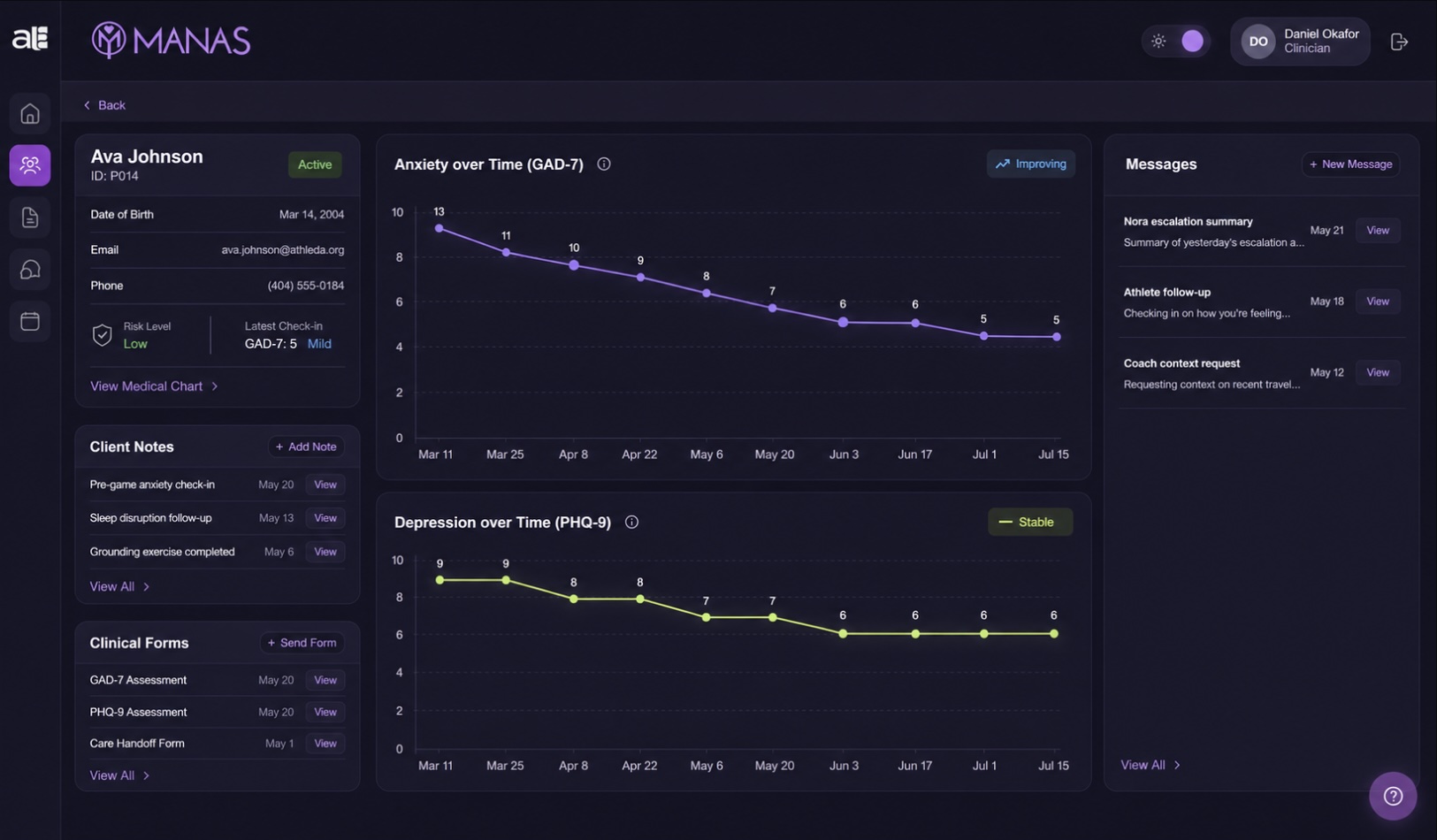
Latest check-in GAD-7: 5 · Mild